
RiccardoBianco
Sustainability you can count.1
I'm a sustainability manager in Milan, working where sustainability, finance and technology meet.
- What I do
- At TreeBlock✓, a climate-tech startup, I help companies measure their emissions and publish sustainability reports that pass an audit, and I turn the rules behind those reports into software. I also invest in and advise young companies, from a timber processor in Liberia✓ to the startups in EAGE✓, the Milan network I co-founded.
- What I love
- Skiing, above all: I coach alpine racers in Aprica✓. Building software with AI. Markets, chess, travel.
- What drives me
- Protecting the mountains I ski on, and the belief that things can really change: technology to measure what matters, markets to make the right choice the cheaper one.
Associate Founder and Sustainability Manager, TreeBlock✓. MSc Transformative Sustainability, Bocconi and Politecnico di Milano✓. Previously EY, Climate Change and Sustainability Services✓.
1 Every number on this site has a source: switch on Verify, bottom right.
Statute
What moves me, one thing leading to the next: skiing, the environment it depends on, the real chance to change things, the technology that makes it possible and the markets that make it scale.
- Art. 1
Skiing comes first.
It's the thing I love most. Every winter I coach in Aprica, from athletes racing at European and World level to people on their first day✓. A few seasons on the same slopes are enough to see how much the mountain depends on the climate: the snow, the season, the jobs of everyone who lives up there.
- Art. 2
What I love, I measure.
That's where my passion for the environment comes from, and why my MSc thesis measures the carbon footprint of the Italian ski sector. The biggest surprise: about two thirds of it comes from visitors travelling there, not from lifts or snowmaking✓. Without that number I would have tried to fix the wrong thing.
- Art. 3
Change is real when you can count it.
I believe things can really change. It starts when a company knows exactly where its emissions come from; before that, every plan is a guess. At EY I checked the figures companies reported against the evidence✓; at TreeBlock✓ I help them measure their footprint and publish sustainability reports that pass an audit. A pledge changes nothing. A reduction you can verify does.
- Art. 4
Technology makes it possible.
Measuring a company properly used to take consultants and weeks of spreadsheets, out of reach for most small businesses. AI and software change that: rules like CSRD and the GHG Protocol become code that checks every figure. I build these tools, such as agents that turn a standard into requirements, a gap analysis and an audit plan✓, with one fixed rule: a machine drafts, a second machine checks, I sign.
- Art. 5
Markets make it scale.
Good intentions don't move capital, prices do. Italy charges €262 per toe for a missed renewable-heat target, exactly the cost gap between a heat pump and a gas boiler✓: raise it a little and complying costs less than paying. When the sustainable choice is also the cheaper one, markets spread it faster than any regulation. That's why I invest and work with founders: a community-forestry timber company in Liberia✓, the startups I meet through EAGE✓.
I want to still be coaching on real snow in twenty years. Code and capital are the most concrete tools I know to get there.
Between the rule and the code
Sustainability work usually breaks in translation: between the people who write regulation, the people who write software and the people who pay for both. I sit in that gap, and I can speak all three. Pick any item to see where it connects.
Hover or tap an item.
Regulation
Capital
Code
CSRD / ESRS Client datasets reconciled across legal entities and reference dates, then checked against ESRS datapoints before they reach a report.
Things that run
Software and products that real people use, most of them outside office hours. Client work is described without client names.
RaceBase
In production, 2026
Management platform for competitive ski clubs: an admin web app, a public site, an API and an iOS and Android app. Rosters, training, races and payments in one place.
racebase.itReporting agent
In use at TreeBlock, 2026
A browser agent that turns a client's documents into sustainability and GHG report pages on TreeBlock ONE, checks every figure against its source and logs each discrepancy for a human to resolve.
Capodanno in baita
In production, 2026
Website and booking system for a New Year's Eve event in the mountains above Aprica, about 250 guests a year. It replaced a set of Excel sheets and a lot of phone calls.
chaletdalbrusca.itSardinia Tour Experience
In production, 2026
Bilingual website and booking system for a boat-tour operator in the La Maddalena archipelago, with seasonal pricing and double bookings blocked at database level.
sardiniatourexperience.comNine books on Amazon
Published, 2026
Four large-print puzzle books and five language editions of a guide to Italy's B1 citizenship exam, typeset entirely by code. Independent solvers stop the build if a single puzzle has no unique answer.
amazon.itESG research pipeline
Running daily, 2026
Tracks regulatory and ESG news across Europe, enriches it and builds charts from World Bank, Eurostat and Our World in Data, which I then use in my own analysis.
Quanto pesa questa aula?
Delivered twice, 2026
A live lesson for ITS Green: students answer from their phones, the classroom becomes a company, a CO₂ inventory builds up on screen and an AI agent writes the sustainability report while a second one checks it.
Standard-to-wizard agents
Prototype, 2026
Eleven agents that read a standard's PDF and produce verbatim clauses, requirements, a gap analysis, a compliance wizard and an audit plan, falling back to local models if the API is down.
Capital
I invest where sustainability has a balance sheet, and I stay close enough to read it. Operator on weekdays, investor and connector the rest of the time.
Eco Wood Processing
Shareholder, investor relations, board advisorLiberia, since 2024
An integrated sawmill and veneer operation built with community forestry. I manage relationships with prospective investors, support fundraising and negotiate terms; the project has secured more than €1 million✓.
Pharma 2
ShareholderItaly
An Italian pharmacy roll-up vehicle within the Hippocrates holding✓.
EAGE
Co-founder and presidentMilan, since 2022
A network that puts founders, investors and corporates at the same table✓, built around concrete deals rather than panels. It also took me to the Silicon Valley Fellowship✓, meeting founders and mentors across the Bay Area.
B-ESG Investing & Analysis
President 2025–26, researcher 2024–25Bocconi University
Bocconi's ESG investing association✓: research on ESG factors and market performance, and a programme that connects students with the people who actually allocate the capital.
Record
SustainabilityFinanceTechnology
Italian, native. English, IELTS 8.0✓. Spanish, B2.
Work
- 2025 – nowTreeBlockAssociate Founder and Sustainability ManagerFrom intern in December 2025 to associate founder in June 2026✓. I run client projects end to end, from data collection and carbon accounting to CSRD reporting, and turn regulatory requirements into product with the engineering team.
- 2025EYClimate Change and Sustainability Services, internEU Taxonomy alignment, carbon footprint models, net zero roadmaps and assurance of sustainability reports for corporate clients✓.
- 2024 – nowEco Wood ProcessingInvestor relations and board advisorInvestors, fundraising and governance for a timber processor in Liberia.
- 2024 – 26B-ESG, BocconiResearcher, then presidentQuantitative ESG research, then the association's agenda, partners and events.
- 2024EcoSwell, Lobitos, PeruRenewable energy volunteerSized and budgeted a solar and battery system for the local hospital, and measured kitchen air quality with a Raspberry Pi✓.
- 2022 – nowEAGECo-founder and presidentA Milan network of founders, investors and corporates.
- 2022 – nowGB Ski Club, ApricaAlpine ski coachFrom complete beginners to athletes racing at European and World level.
- 2022Maglificio RipaProduction planning internScheduling, resource allocation and workflow in an Italian knitwear factory.
Study
- 2024 – 26Bocconi University and Politecnico di MilanoMSc Transformative Sustainability, joint degreeThesis: the environmental footprint of Alpine ski resorts across energy, water, soil and transport✓.
- 2026HEC ParisSummer School, Sustainable Finance and InvestmentPrivate equity, private debt and infrastructure for the net zero transition; a case judged by practitioners✓.
- 2023 – 24SUPSI, LuganoErasmus exchange, Management EngineeringOne semester in Switzerland.
- 2020 – 24Politecnico di MilanoBSc Management EngineeringThesis: a photovoltaic system for an Industry 4.0 automated warehouse, from energy savings to the investment case.
Field notes
What I write about: the announcement, then the part that changes the conclusion. Six recent posts.
Headline. Italy sends Brussels 2,078 measures to restore nature.
91% of protected land habitats are in unfavourable condition and 7% are favourable. Restoration isn't a Green Deal folly, it's maintenance of the capital that farming, fishing and tourism run on.
Post, 29 Sep 2026, citing ISPRA. Read the postHeadline. Parliament doubles the ETS2 safety valve.
It releases allowances, it doesn't cap the price. Gas covers 49% of Italian household energy against 29.5% in the EU, so the bill lands in Italian homes first.
Post, 19 Sep 2026, citing Eurostat 2024 data. Read the postHeadline. Italy fines missed renewable-heat targets at €262 per toe.
That's exactly the cost gap between a heat pump and a gas boiler. Paying and complying cost almost the same, and whoever pays skips the investment.
Post, 14 Sep 2026, citing MASE decree no. 233 of 9 Sep 2026. Read the postHeadline. JetZero raises $100 million for its all-wing airliner.
It's secured debt ahead of an equity round, and the billion 'raised' includes grants and commitments. Until an engine supplier commits in public, it's a plan rather than a programme.
Post, 3 Sep 2026. Read the postHeadline. Emerald AI raises $150 million at a $1bn valuation.
The bet is that 98 GW of US grid headroom already exists if data centres accept curtailment 0.5% of the time. Whether they get paid for it is a rate case, not an engineering problem.
Post, 27 Aug 2026, citing Duke's Nicholas Institute. Read the postHeadline. COP17 announces US$1.3bn for land restoration.
The annual shortfall is US$278bn. An economic return isn't an investable one: degraded rangeland pays no coupon.
Post, 25 Aug 2026, citing the UNCCD press release. Read the post
Off duty
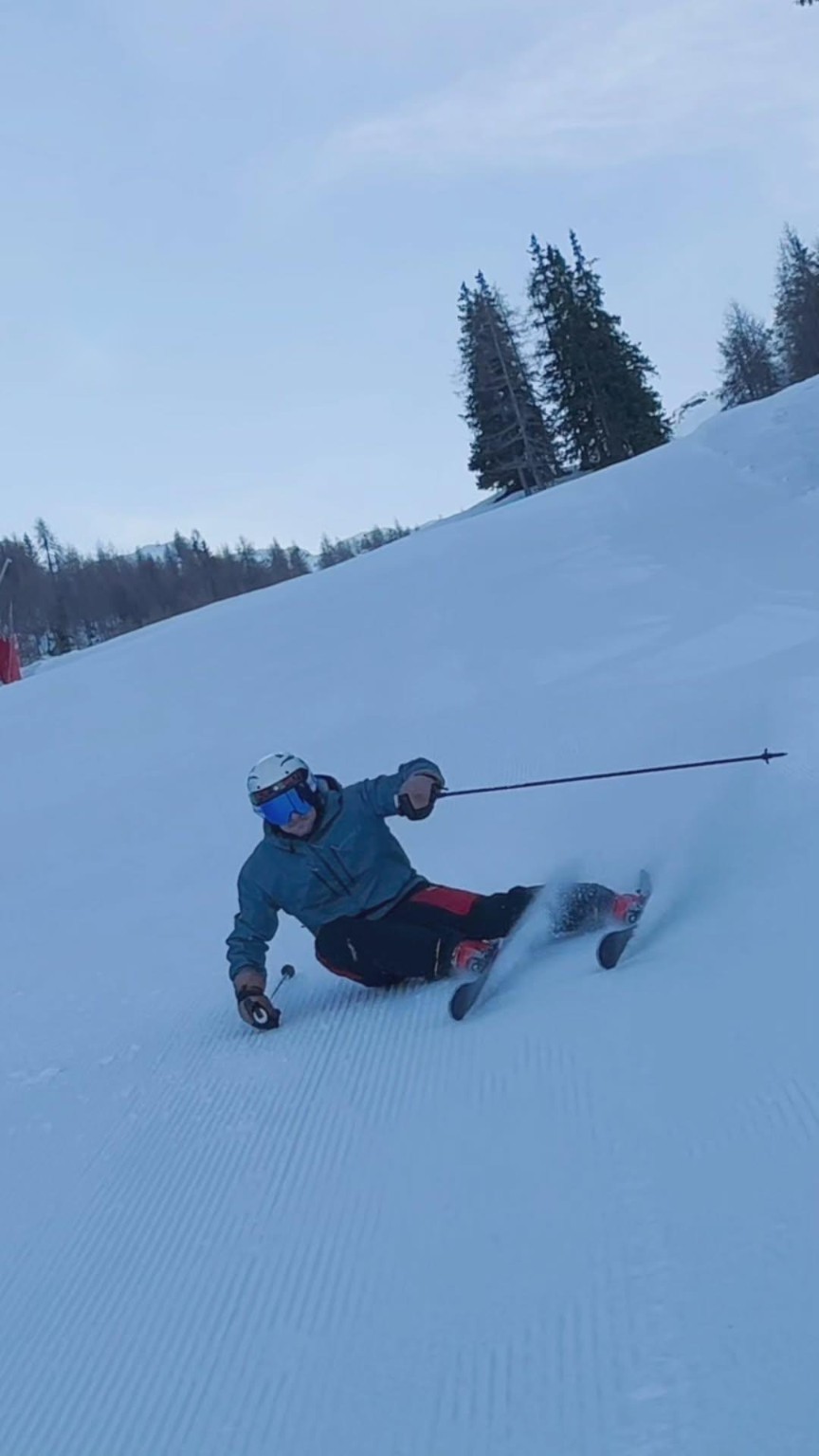
Winters in Aprica, as an alpine ski coach at GB Ski Club✓. I coach athletes racing at European and World level and teach people who have never clipped into a ski.
Then I measured the slope.
My MSc thesis measures the Scope 1 to 3 footprint of the Italian Alpine ski sector: lifts, snowmaking, grooming and the drive up. Most of it isn't on the mountain at all✓.
- 956 kt
- CO₂e a year for the sector, range 488 to 1,522 kt✓
- 47.8 kg
- CO₂e per skier-day, close to the upper French benchmark✓
- ≈ 2/3
- from visitors getting there, not from lifts or snow✓
Also: PADI Advanced Open Water diver, EU drone pilot licence✓, chess.
Send a signal.
For work, investments, a talk or a ski lesson. Email is the fastest way to reach me.